NEBRASKA LEGISLATURE
The official site of the Nebraska Unicameral Legislature

Sen. Tony Vargas
District 7
The content of these pages is developed and maintained by, and is the sole responsibility of, the individual senator's office and may not reflect the views of the Nebraska Legislature. Questions and comments about the content should be directed to the senator's office at tvargas@leg.ne.gov
January 3rd, 2024
Thank you for visiting my website. It is an honor to represent the people of the 7th legislative district in the Nebraska Unicameral Legislature.
You’ll find my contact information on the right side of this page, as well as a list of the bills I’ve introduced this session and the committees on which I serve. Please feel free to contact me and my staff about proposed legislation or any other issues you would like to address.
Sincerely,
Sen. Tony Vargas
June 1st, 2023
The 108th Legislature 1st Regular Session adjourned Sine Die! It was an honor to work and collaborate with new and returning Senators on legislation that will improve the lives of Nebraskans. In January, I introduced and co-sponsored a number of bills that focus on improving maternal health outcomes, expanding affordable housing programming, and supporting our small businesses.
Of those bills, several were signed into law.
LB75 (Amended into LB227) – Grants the Maternal Death Review Team the authority to conduct reviews on instances of Severe Maternal Morbidity in Nebraska.
LB201 (Amended into LB705) – Beginning in the 2024-25 school year, students will be required to complete and submit a Free Application for Federal Student Aid (FAFSA) prior to graduation from high school. The requirement may be waived by a parent or guardian.
LB539 – Transfers the dollars from the Juul Tobacco settlement the State of Nebraska receives each year to Tobacco Prevention and Control to focus on reducing tobacco use by our youth.
LB570 (Amended into LB227) – Adopts the Overdose Fatality Review Team to allow multidisciplinary teams to conduct a comprehensive and multidisciplinary review on overdose fatalities to prevent future drug overdose deaths through policy changes.
LB740 (Amended into LB562) – Standardizes and streamlines the permitting and inspection process for food trucks, encouraging entrepreneurship, and maintaining dining choices for consumers.
LB756 – Makes changes to the Nebraska Job Creation and Mainstreet Revitalization Act that will ensure the continuation of and seek to make improvements to the successful Nebraska Historic Tax Credit.
LB774 (Amended into LB705) – Modifies the Student Discipline Act to clarify time-frames in which certain actions must be taken, bring consistency to permitting students charged with discipline violations to complete classwork and homework, and provide consistency and more equitable fairness in student discipline hearings.
LB802 – Appropriates funds to the University of Nebraska Medical Center for research and treatment of pediatric cancer research.
I’ve been a proud member of the Appropriations Committee for the last 7 years. This year, we were able to pass a balanced budget focused on economic development, health and human services, and infrastructure across our state as well as several income tax cuts and property tax relief measures.
Every day I am honored to represent District 7 in the Nebraska Legislature. I look forward to every chance to communicate with my friends and neighbors in District 7, and I will fight every day to promote District 7 values to make Nebraska an even better place to call home for everyone.
As always, please feel free to reach out to me or my office at 402.471.2721, tvargas@leg.ne.gov, or any social media. My Legislative Aide, Cristina Prentice, and Administrative Aide, Morgan Wallace are willing and excited to help.
Best regards,
Senator Tony Vargas
Nebraska Legislature, District 7
La primera sesión ordinaria de la 108ª Legislatura se levantó Sine Die. Fue un honor trabajar y colaborar con los senadores nuevos y viejos en la legislación que mejorará la vida de los habitantes de Nebraska. En enero, presenté y copatrociné una serie de proyectos de ley que se centran en la mejora de los resultados de salud materna, la ampliación de los programas de vivienda asequible, y apoyar a nuestras pequeñas empresas.
Varios de esos proyectos se convirtieron en ley.
LB75 (Enmendado en LB227): Otorga al Equipo de Revisión de Muertes Maternas la autoridad para realizar revisiones en casos de Morbilidad Materna en Nebraska.
LB201: A partir del año escolar 2024-25, los estudiantes deberán completar y enviar una Solicitud Gratuita de Ayuda Federal para Estudiantes (FAFSA) antes de graduarse de la escuela secundaria. El requisito puede ser renunciado por un padre o tutor.
LB539: Transfiere los dólares del acuerdo de Juul Tobacco que el estado de Nebraska recibe cada año a la Prevención y el control del tabaco para enfocarse en reducir el consumo de tabaco por parte de nuestros jóvenes.
LB570 (Enmendado en LB227): Adopta el Equipo de revisión de fatalidad por sobredosis para permitir que los equipos multidisciplinarios realicen una revisión integral y multidisciplinaria de las fatalidades por sobredosis para prevenir futuras muertes por sobredosis de drogas a través de cambios en la política.
LB740 (Enmendado en LB562): Estandariza y agiliza el proceso de permisos e inspección para camiones de comida, fomentando el espíritu empresarial y manteniendo las opciones gastronómicas para los consumidores.
LB756: Introduce cambios a la Ley de Revitalización de Calles Principales y Creación de Empleos de Nebraska que asegurará la continuación y tratarán de mejorar el exitoso Crédito Fiscal Histórico de Nebraska.
LB774 (Enmendado en LB705): Modifica la Ley de Disciplina Estudiantil para aclarar los marcos de tiempo en los que se deben tomar ciertas acciones, brindar consistencia para permitir que los estudiantes acusados de infracciones disciplinarias completen el trabajo y las tareas de clase, y brindar consistencia y equidad más justa en el trato de los estudiantes. audiencias disciplinarias.
LB802: Asigna fondos al Centro Médico de la Universidad de Nebraska para la investigación y el tratamiento del cáncer pediátrico.
He sido un miembro orgulloso del Comité de Asignaciones durante los últimos 7 años. Este año, pudimos aprobar un presupuesto equilibrado centrado en el desarrollo económico, la salud y los servicios humanos, y la infraestructura en todo nuestro estado, así como varios recortes de impuestos sobre la renta y medidas de alivio de impuestos sobre la propiedad.
Cada día me siento honrado de representar al Distrito 7 en la Legislatura de Nebraska. Espero con interés cada oportunidad de comunicarme con mis amigos y vecinos en el Distrito 7, y voy a luchar todos los días para promover los valores del Distrito 7 para hacer de Nebraska un lugar aún mejor para llamar a casa para todos.
Como siempre, no dude en ponerse en contacto conmigo o mi oficina en 402.471.2721, tvargas@leg.ne.gov, o cualquier medio de comunicación social. Mi ayudante legislativa, Cristina Prentice y la ayudante administrativa, Morgan Wallace están dispuestas y emocionadas de ayudar.
Saludos cordiales,
Senator Tony Vargas
Nebraska Legislature, District 7
November 20th, 2021
I hope you are having a safe and enjoyable fall season. We are about two months away from the 2022 Legislative Session and I would like to provide a few updates.
As the COVID-19 pandemic continues, and hospitals in our area are reaching capacity, we can all do our part to end this pandemic by encouraging our friends, family, and neighbors to get vaccinated. The Douglas County Health Department is hosting free COVID-19 vaccination clinics for anyone 5 years of age or older Monday through Friday, 8:30 a.m. to 4:00 p.m. Individuals 5 through 18 years of age must be accompanied by an adult or guardian to be vaccinated. For more information on the vaccines, booster shots, and clinic locations, go to douglascountyhealth.com/covid-19 or call 402-444-3400.
The Legislature’s Appropriation Committee is currently conducting an interim study to determine how to best utilize funds from the federal government through the American Rescue Plan Act of 2021, or ARPA. Nebraska will receive significant dollars to help the state recover from the impact of COVID-19 on the economy, public health, education, state and local governments, individuals, and businesses. Our Unicameral Legislature relies heavily on the citizens of the state of Nebraska to act as our second house, and I encourage you to take part in this public process by sharing your ideas for how these funds should be spent. ARPA proposal letters can be sent to the Appropriations Committee email at apppl@leg.ne.gov.
Every day I am honored to represent District 7 in the Nebraska Legislature. Even more importantly, I am thrilled to come home to District 7 every night to my family. My wife, Lauren, and I could not be more excited to raise our children, Ava and Luca, in a community that values inclusivity, love, and diversity. As our children grow older, I know their neighbors in downtown and South Omaha will value them and our community. I look forward to every chance to communicate with my friends and neighbors in District 7 and I will fight every day to promote District 7 values to make Nebraska an even better place to call home for everyone.
I will be introducing new legislation during the 2022 Legislative Session and appreciate hearing from my neighbors in District 7 as I prepare. As always, please feel free to reach out to me or my office at 402.471.2721, tvargas@leg.ne.gov, or any social media. My Legislative Aide, Cristina Prentice, Administrative Aide, Morgan Wallace, and all of our interns are willing and excited to help.
Ojalá que tengan una temporada segura y agradable. Solo faltan dos meses hasta la sesión legislativa 2022 empieza y querría proveer unas actualizaciones.
Como continúa la pandemia de COVID-19, y los hospitales en nuestra área están casi llenos, podemos hacer nuestra parte para parar la pandemia de fomentar a nuestros amigos, familias y vecinos a vacunarse. El Departamento de Salud del condado de Douglas ofrece las clínicas gratis de vacunaciones de COVID-19 para cualquier persona de cinco años o mayor los lunes hasta los viernes, 8:30 por la mañana hasta las 4 de la tarde. Los individuos de 5 hasta 18 años necesitan acompañarse con un adulto o guardián para estar vacunado. Para ver más información sobre las vacunas, las inyecciones de refuerzo y lugares de clínicas, ve a douglascountyhealth.com/covid-19 o llama al 402-444-3400.
El comité de asignaciones de legislativa ahora conduce una investigación provisional para determinar cómo usar fondos del gobierno federal del plan de rescate estadounidense (“American Rescue Plan Act” o “ARPA”) de 2021. Nebraska recibirá fondos para ayudar a la recuperación del estado del impacto de COVID-19 por la economía, la salud pública, la educación, el gobierno del estado y del local, los individuos y los negocios. Nuestra legislativa unicameral confía mucho por los ciudadanos del estado de Nebraska en actuar como nuestra segunda casa, y le fomento a tomar parte en el proceso público en compartir sus ideas en cómo se puede usar estos fondos. Se pueden mandar sus cartas de propuesta del plan de rescate estadounidense (“ARPA”) al correo del comité de apropiaciones a apppl@leg.ne.gov.
Cada día me siento honrado en representar el distrito 7 en la legislatura de Nebraska. Más importante, estoy emocionado de venir a mi familia en casa en el distrito 7 cada noche. Mi esposa, Lauren, y yo no podríamos estar más emocionados al criar a nuestros niños, Ava y Luca, en una comunidad que valora a la inclusividad, amor y diversidad. Cómo crecen nuestros niños, sé que sus vecinos en el centro y el sur de Omaha los valorará a ellos y a nuestra comunidad. Me anticipo a cada oportunidad de comunicarme con mis amigos y vecinos en el distrito 7 y lucharé cada día para promover los valores del distrito 7 para hacer de Nebraska un lugar aún mejor al que llamar hogar para todos.
Voy a introducir el nuevo legislativo durante la sesión legislativa y agradezco oír de mis vecinos en el distrito 7 como me preparo. Como siempre, por favor no duden en comunicarse conmigo o con mi oficina a 402.471.2721, tvargas@leg.ne.gov, o en cualquier red social. Mi asistente legislativo, Cristina Prentice, asistente administrativo, Morgan Wallace, y todos de nuestros pasantes están dispuestos y emocionados de ayudar.
August 30th, 2021
This month, I wanted to inform you about the redistricting process occurring in Nebraska throughout the month of September. The State Legislature is required by the U.S. and state constitutions to redraw various governmental district boundaries every 10 years in response to population changes reflected in the U.S. Census. New district boundaries will be created for the three U.S. House of Representatives districts, 49 legislative districts, Nebraska Supreme Court, Public Service Commission, State Board of Education, and the University of Nebraska Regents.
Last session, the Redistricting Committee introduced a Legislative Resolution to ensure that redistricting plans are constitutionally acceptable and provide criteria for senators throughout the process. The resolution passed with a vote of 31-16. Among many things, the criteria in this resolution prohibit new district boundaries that will result in the unlawful dilution of any minority population’s voting strength. It is also a requirement that these boundaries must define districts that are easily identifiable and understandable to voters, and allow for the preservation of core prior districts.
Once the redistricting process occurs, I encourage you to stay informed and optimistic, whatever the outcome.
Every day I am honored to represent District 7 in the Nebraska Legislature. Even more importantly, I am thrilled to come home to District 7 every night to my family. My wife, Lauren, and I could not be more excited to raise our children, Ava and Luca, in a community that values inclusivity, love, and diversity. As our children grow older, I know their neighbors in downtown and South Omaha will value them and our community. And I will fight every day to promote District 7 values to make Nebraska an even better place for everyone.
As always, please feel free to reach out to me or my office at 402.471.2721, tvargas@leg.ne.gov, or any social media. My Legislative Aide, Cristina Prentice, Administrative Aide, Morgan Wallace, and all of our interns are willing and excited to help.
Este mes, querría informarle sobre el proceso de re-distribución que está ocurriendo en Nebraska sobre el mes de septiembre. Se requieren las constituciones estadounidense y estado la legislatura estatal a redibujar varios lindes distritos cada 10 años en respuesta a cambios en población que están reflejado en el censo de EE. UU. Nuevos límites de distrito serán creados para los tres distritos de la cámara de los representantes, 49 distritos legislativos, el tribunal supremo de Nebraska, la comisión de servicio público, la junta estatal de educación y los regentes de la universidad de Nebraska.
La última sesión, el comité de redistribución de distritos presentó una resolución legislativa para asegurar que los planes de redistribución de distritos sean constitucionalmente aceptables y provean criterios para los senadores durante el proceso. La resolución se aprobó con un voto de 31-16. Entre otras cosas, los criterios en esta resolución prohíben nuevos lindes distritos que resultarán en la dilución ilegal de la fuerza de voto en cualquier población. También, es un requisito que estos lindes deban definir los distritos que son fácilmente identificables y comprensible a los votantes, y permitan la preservación de distritos centrales anteriores.
Cuando el proceso de la redistribución de distritos ocurre, le fomenta a seguir informados y optimista, no importa el resultado.
Todos los días me siento honrado en representar el distrito 7 en la legislatura de Nebraska. Más importante, estoy emocionado de venir a mi familia en casa al distrito 7 cada noche. Mi esposa, Lauren, y yo no podríamos estar más emocionados para criar a nuestros niños, Ava y Luca, en una comunidad que valora a la inclusividad, amor y diversidad. Cómo crecen nuestros niños, sé que sus vecinos en el centro y el sur de Omaha los valorará a ellos y a nuestra comunidad. Y lucharé cada día para promover los valores del distrito 7 para hacer de Nebraska un lugar aún mejor para todos.
Como siempre, por favor no duden en comunicarse conmigo o con mi oficina a 402.471.2721, tvargas@leg.ne.gov, o en cualquier red social. Mi asistente legislativo, Cristina Prentice, asistente administrativo, Morgan Wallace, y todos de nuestros pasantes están dispuestos y emocionados de ayudar.
April 12th, 2021
The 107th session of the Nebraska Legislature is in full swing, and while this year’s session is markedly different from past years with our interpersonal interaction limited due to the Coronavirus, we remain committed to addressing the most pressing issues that affect Nebraskans every day.
On Friday, April 9th we approved Nebraska’s state budget for the next two years. Budgets aren’t about numbers on a spreadsheet. Budgets are about values, priorities, and people. In a Unicameral legislature, like the one we have here in Nebraska, we must work together to accomplish our goals. This is my fifth year serving on the Appropriations Committee, so I know how arduous the process can be to put together a budget. State agencies started working on their budget requests ten months ago. The Governor and his staff worked carefully with the Committee for form his own Budget recommendations. We sought input from interested stakeholders and from the public. More than forty bills drafted by myself and my colleagues were incorporated into a package hundreds of pages long. Between 49 State Senators, the Governor’s staff, the agency heads and the public, we worked with hundreds of people to craft this legislation. In today’s hyper-partisan environment, it would have been easy to fail. It would have been easy to refuse compromises, get frustrated, and walk away. But we do things differently in Nebraska, we work together.
Our budget was built using four pillars to support Nebraska for the next two years: ensuring more, better paying jobs; job training to give workers the skills they need to get those new jobs and keep them; making sure that every Nebraskan can live a healthy lifestyle; and finally, guaranteeing that our economy is one where hard workers reap the benefits.
With this year’s budget, we will be providing funding for the Business Innovation Act. Since this legislation first passed in 2012, independent analysts have found the program to be a success. Across 217 participating businesses, there were over 1,100 direct jobs created because of the Business Innovation Act. Even more importantly, the average wage of those jobs created has steadily increased. In 2014, these jobs were paying on average just over $50,000 per year. By 2020, the average wage had increased to over $67,000 per year. That is substantially higher that the statewide mean wage of $47,000 dollars. This success is a result of investment in Nebraska innovation designed to grow Nebraska from the inside-out. We don’t know if there’s an upper limit to the effectiveness of this program – some amount of funding we can hit where we will find diminishing returns. What I can tell you that we’ll never find that limit if we don’t reach for it and push against it, and successful programs deserve additional funding to grow that success.
We’re also funding the Job Training Cash Fund. We created this fund last year when we passed the Customized Job Training Act, though we deferred funding it until this year due to the Coronavirus pandemic. The appropriation to this fund will help prepare Nebraska’s workforce for the challenges of our new national economy by creating grants to pay for internships and job training at firms that use the funds to either create new jobs, or to enhance the earning potential of existing jobs. Jobs created through these internships and job training grants will be strengthened, and the workers will have better earning potential, with this funding in place. By funding the program, we will actualize the main goal of the Customized Job Training Act: creating newer, higher paying jobs for Nebraskans. This is exactly the kind of commitment to our workforce that we ought to be making. We don’t want new economy jobs moving overseas. We want to keep those jobs and the people who work them right here.
We’re also expanding our funding of Nebraska’s eighteen Public Health Departments. A year ago, many of us didn’t know much about the role of our Public Health Departments. What we’ve found is that these departments were stretched thin even before the Coronavirus pandemic struck, and the pandemic didn’t help the situation. Earlier this year, I introduced LB585 to appropriate $5 million total to improve our public health infrastructure. The first $3 million would be distributed evenly across all eighteen Public Health Departments, and the final $2 million will be distributed based on the population density. These kinds of proactive investments in our public health infrastructure will help us address future public health crises. If we wait to make these kinds of investments until we’re reacting to a problem, then its already too late. The coronavirus pandemic will be a touchstone in all our lives because of the disruption it caused. But it is not the only public health crisis we’ve faced as a state or as a nation during most of our lifetimes, and it won’t be the last. From the bird flu to the Opioid epidemic, HIV/AIDS and asbestos exposure, funding our public health departments will not only ensure a quicker reaction to the next public health crisis, it will also encourage better health decisions among the public because of the programs these public health departments can promote.
These are all important priorities that will help us meet our obligations to Nebraskans today and in the future. We approached this budget in a balanced, bipartisan, and responsible way. Nebraskans have made it clear over and over again that they want their elected leaders to approach policy this way. Over the last five years, I’ve seen the highs and lows of the Nebraska Legislature. It’s not always easy, but I have never been more optimistic about Nebraska’s future. We are a strong and resilient people, and I know we are united in our desire to face the greatest challenges facing our society. When we work together, there’s no limit to what we can achieve.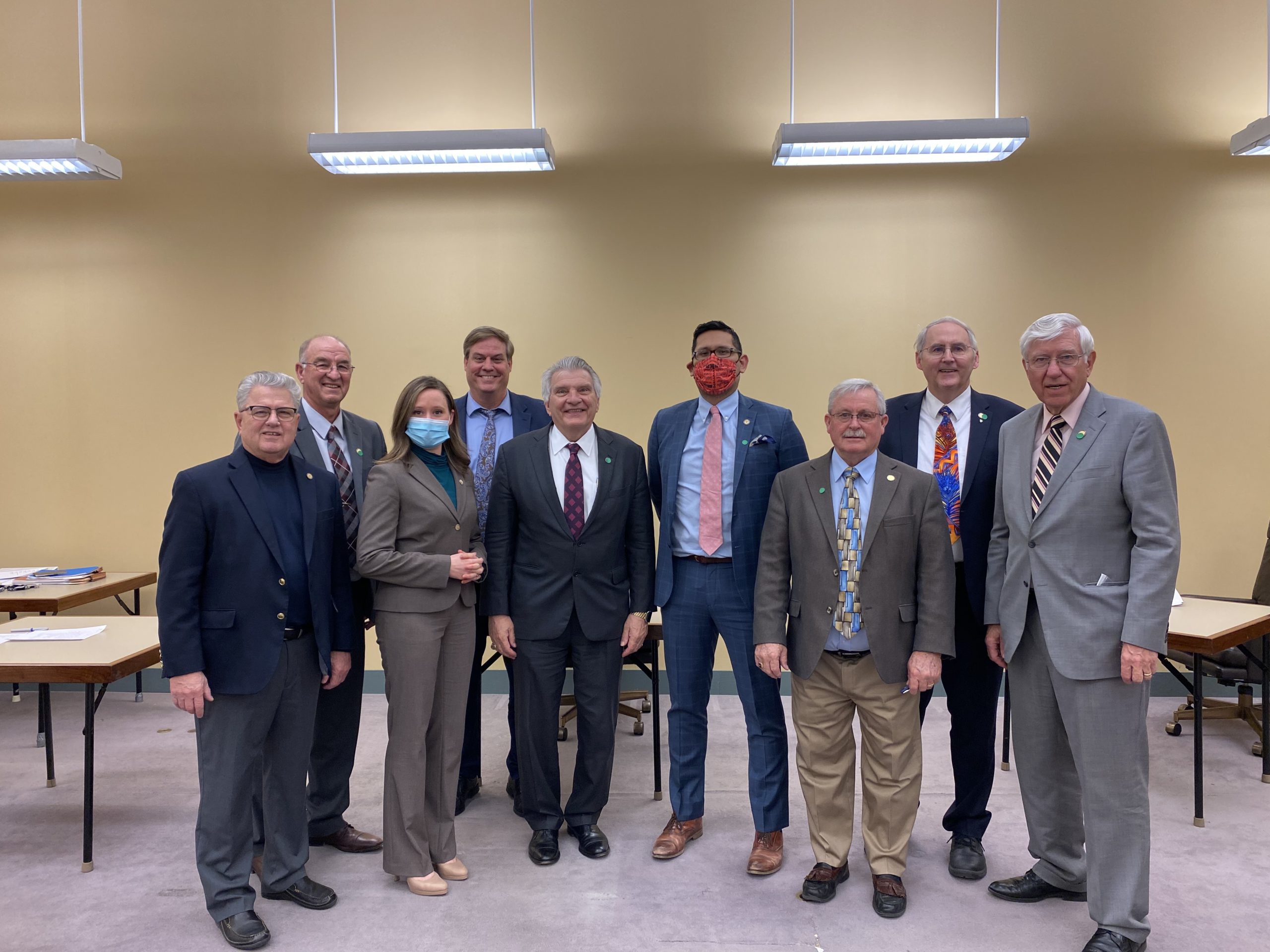
January 22nd, 2021
I hope you began the new year with the same renewed hope, good health, and happiness that my family and I did. Lauren and I were thrilled to welcome our second child, Luca Anthony Vargas, on New Years Eve. As many of you know, I lost my father to COVID-19 last Spring, and Luca was given the middle name “Anthony” in his honor. Lauren and I are so thankful for your support and love, especially over the past year, and could not be more excited and blessed to raise our children in this generous community.
We began the 107th Legislature on January 7th and I was sworn in to begin my second term as your senator with an oath to uphold my commitment to serving you to the best of my ability. I was honored to be re-elected by my peers to serve as Vice Chair of the Executive Board, a role that will require the continuation of the bipartisan, consensus-forming approach that I have taken during my first four years in office.
This session I introduced 26 bills to help strengthen and protect our state and community. These bills will:
Protect workers
Improve public health
Honor our veterans
Strengthen our education system
Strengthen our economy and workforce
Support equity and diversity
You can find more information about each of these bills on my legislative website: news.legislature.ne.gov/dist07/
Every day I am honored to represent District 7 in the Nebraska Legislature. As always, please feel free to reach out to me at (402) 471-2721, tvargas@leg.ne.gov, or on any of my social media accounts. My Legislative Aide, Meg Mandy, Administrative Aide, Cristina Prentice, and all of our interns are willing and excited to help. 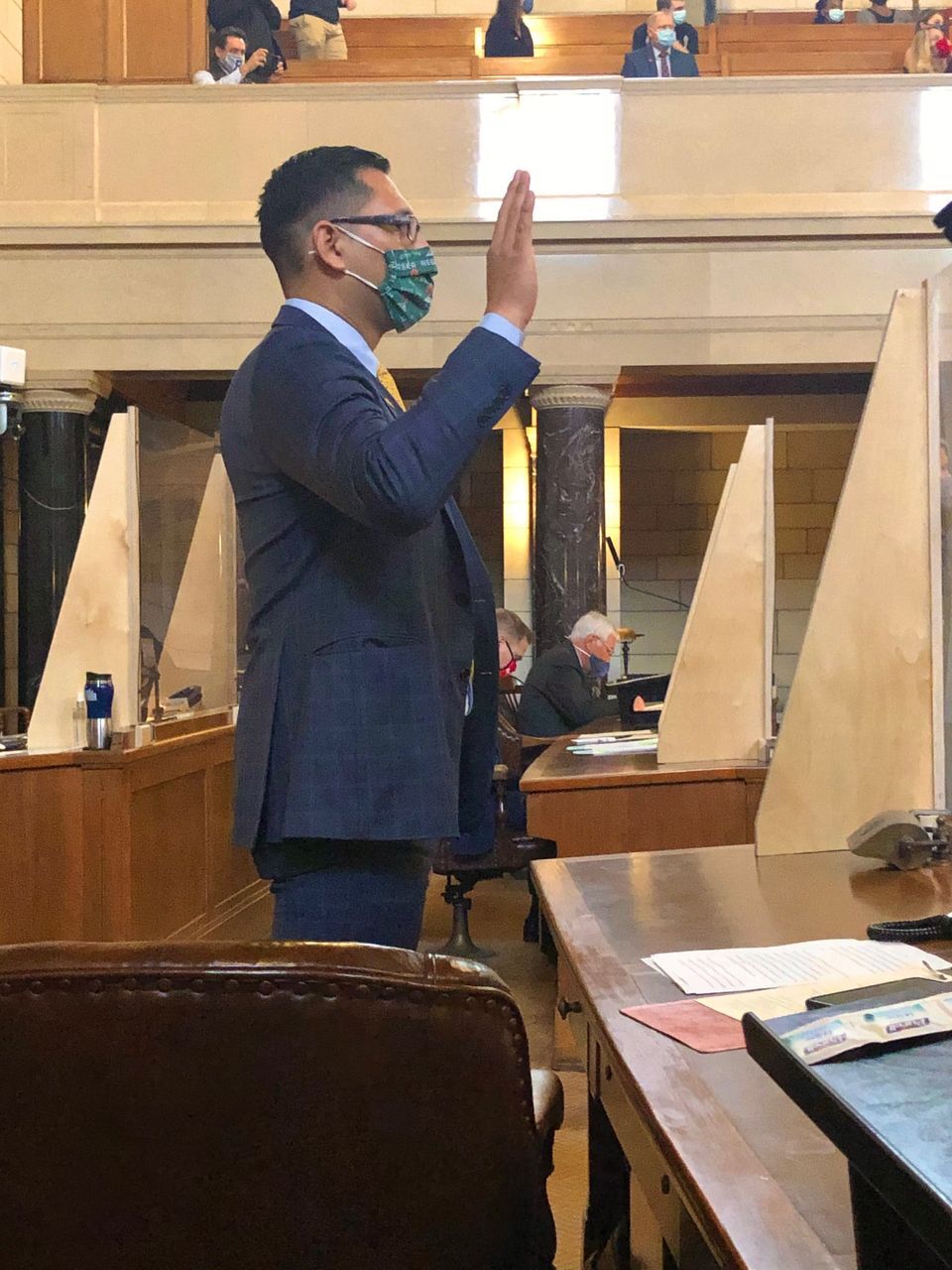
August 14th, 2020
The 2020 session has adjourned sine die!
Over the last 3 weeks, my colleagues and I returned to our State Capitol to finish the remaining 17 days of the session.
During this biennium session, I passed 18 bills:
LB 292 – Appropriates $500,000 in each year of the biennium to the Department of Education for the reinstatement of the Nebraska Information Technology Initiative under the Center for Student Leadership and Expanded Learning Act;
LB 478 – Prohibits evidence of a minor’s consent in any civil proceeding involving certain alleged sex offenses;
LB 477 + 477 (A) – Provide an income tax exemption for Segal AmeriCorps Education Awards;
LB 515 – Protects all students’ constitutional right to due process and fundamental fairness;
LB 678 – Adopts the Alternative Certification for Quality Teachers Act;
LB 694 – Change matching fund requirements under the Nebraska Affordable Housing Act;
LB 713 – Provide for long-term analyses from the Legislative Fiscal Analyst;
LB 737 – Change requirements for an annual status report relating to the Affordable Housing Trust Fund;
LB 739 – Change procedures and requirements for use of restrictive housing of inmates;
LB 1018 – (Amended into LB 1008) Appropriates $6.5 million of general funds to local public health departments;
LB 1019 – (Amended into LB 1008) Appropriates $3 million of general funds to federally qualified health centers
around the state;
LB 1050 – (Amended into LB 1008) Appropriates additional funds to the Coordinating Commission for Postsecondary Education for the Nebraska Opportunity Grant Program;
LB 1089 – Require all high school students to complete and submit a FAFSA;
LB 1147 (Amended into LB 1188) – moves the administration, maintenance, and operations of any building where a juvenile committed to the Office of Juvenile Services for placement at a youth rehabilitation and treatment center resides away from the Department of Administrative Services and back to the Department of Health and Human Services;
LB 1148 – Protect children by providing legislative and judicial oversight of youth committed to Youth Rehabilitation Treatment Centers;
LB 1149 (Amended into LB 1188) – improve programming and quality of care for youth committed to the Office of Juvenile Services;
LB 1155 (Amended into LB 866) – Adopt the Middle Income Workforce Housing Investment Act and transfer funds from the General Fund;
LB 1210 (Amended into LB 881) – Create the offense of sexual exploitation of a student.
Engaging with constituents and community leaders is by far my favorite duty as a Senator. Even though I have only been able to be in touch with my constituents virtually over the last few months, I am so glad that we have been able to stay connected. Your position and insight on legislation has been and will continue to be invaluable.
Though we have adjourned, my work as your senator continues. Throughout the spread of COVID-19, I have assisted countless Nebraskans in filing and receiving their unemployment and applying for small business loans. If you are still experiencing delays or issues filing for unemployment, please feel free to contact my office.
I also introduced a number of interim studies that will help guide my research and preparation for the next legislative session. If you are interested in contributing to any of them please reach out to let me know. You can find them listed here https://www.nebraskalegislature.gov/bills/search_by_introducer.php?Introducer=144
I am honored to represent District 7 in the Nebraska Legislature. Coming home to District 7 every night to my family is the greatest privilege of my life. As my wife Lauren and I raise our daughter, Ava, and prepare to welcome our son into the world early next year, I could not be more proud to raise them in District 7.
As always, please feel free to reach out to me or my office at 402.471.2721, tvargas@leg.ne.gov, or any social media. My Legislative Aide, Meg Mandy, and Administrative Aide, Cristina Prentice are also willing and eager to help.
Best regards,
Senator Tony Vargas
Nebraska Legislature, District 7
Facebook: @TonyVargasNE; Twitter: @TonyVargas;Instagram: @tonyvargasne
July 21st, 2020
Yesterday, 3 of my juvenile justice bills moved to Final Reading as part of a package of bills.
In January, the Heath and Human Services committee released a report with 14 recommendations for how the Legislature could help stabilize the State Youth Rehabilitation and Treatment Centers, or YRTCs. 11 bills were then introduced that created more complete oversight of the YRTCs, 3 of which were bills I proudly sponsored. These 11 bills were then combined into 4 main bills. Yesterday morning, these four bills, LB 1140, LB 1144, LB 1188, and LB 1148, were all moved to the final stage of legislative debate. It was an honor to collaborate with Senator Howard, members of the Heath and Human Services Committee, Senator Lathrop, members of the Judiciary Committee, and stakeholders and advocates in our communities to create meaningful change, provide support, and add critical and necessary oversight.
July 19th, 2020
Tomorrow, my colleagues and I will return to Lincoln to finish the remainder of the session. While this year has been extremely challenging for me and my family, my promise to fight for a fair, just, prosperous Nebraska is stronger than ever. Things will inevitably be different at the State Capitol building, but my commitment to my community is unwavering.
My bill, LB1148, is up tomorrow, which is part of a package of legislation related to juvenile justice and reforms our Youth Rehabilitation and Treatment Centers (YRTC). I will also continue to work towards getting my priority bill, LB 1089, to the floor for debate, which would require all high school students to complete the FAFSA. I have a few other bills that I’ll be focusing on as well – stay tuned for more info on those.
Every day I am honored to represent District 7 in the Nebraska Legislature. I could not be more proud to work for a community that values inclusivity, strength, and diversity. I will fight every day to promote District 7 values to make Nebraska an even better place to call home for everyone. As always, please feel free to reach out to me or my office at 402.471.2721, tvargas@leg.ne.gov, or any social media. My staff and I are willing and eager to help.
June 18, 2020
The Honorable Pete Ricketts
Governor of the State of Nebraska
State Capitol, Room 2316
Lincoln, NE 68509
Governor Ricketts,
Nebraskans working in meatpacking plants are among the hardest hit population groups in Nebraska and are the backbone of our economy and food security. Without significant protections, horrific outbreaks across the state threaten the lives and livelihood of many hardworking Nebraskans and their families. Earlier this month, 786 cases were reported at the Dakota City Tyson beef plant. We continue to see numbers of cases rising across the State.
Workers in the meat and poultry plants in Nebraska have faced difficult working conditions for many years. But COVID-19 represents a new and significant threat to the health and lives of workers in these plants. Right now workers need consistent, uniform, and enforceable protections that have yet to be put in place. Importantly, protecting worker health in the COVID-19 pandemic is also crucial to protecting community health.
Nebraska can, and should, do more to protect our critical food security infrastructure and the Nebraskans working hard every day to keep food on our tables. Preventative policies must be implemented to protect people from infection. The most important among these preventative policies would be (1) to institute six-foot distancing measures in plants that would increase physical space between workers on the line and throughout the facility, and (2) to institute transparency of information, contact tracing, and effective quarantine practices in these workplaces.
We ask that you specifically define and mandate a policy to protect Nebraskans working in meatpacking and poultry plants across the state. The current lack of policy and protections is endangering lives, including lives of family members of hard-working Nebraskans. We value our workforce in Nebraska and want to make sure everyone comes home from work healthy and alive.
Sincerely,
Senator Tony Vargas
Senator Kate Bolz
Senator Carol Blood
Senator Tom Brandt
Senator Michaela Cavanaugh
Senator Ernie Chambers
Senator Sue Crawford
Senator Wendy DeBoer
Senator Myron Dorn
Senator Matt Hansen
Senator Megan Hunt
Senator Sara Howard
Senator Rick Kolowski
Senator Steve Lathrop
Senator Brett Lindstrom
Senator John McCollister
Senator Mike McDonnell
Senator Adam Morfeld
Senator Patty Pansing Brooks
Senator Dan Quick
Senator Lynn Walz
Senator Justin Wayne
Senator Matt Williams
Senator Anna Wishart
Sen. Tony Vargas
P.O. Box 94604
Lincoln, NE 68509
(402) 471-2721
Email: tvargas@leg.ne.gov
- Column (2)
- Uncategorized (29)
- Welcome (1)
-
Appropriations
Committee On Committees
Executive Board
Reference
Planning

Streaming video provided by Nebraska Public Media